Technology / Research architecture

Ocean currents.
Engineered interaction.

A closer look at our submerged wingsail concept: the physical system, the modeling approach and the evidence needed to evaluate a climate application.

01 / Working principle

From ambient flow to a testable system.

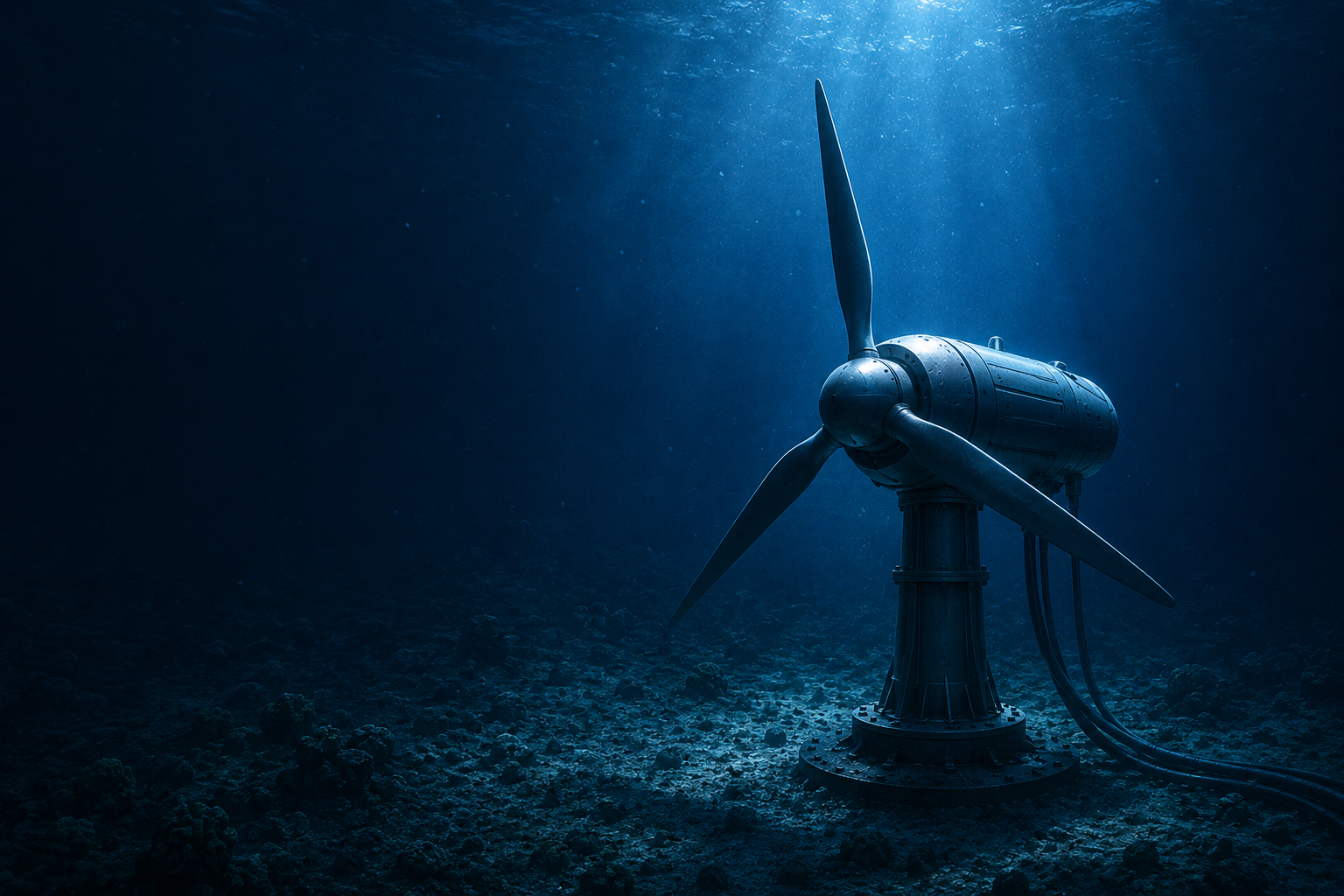
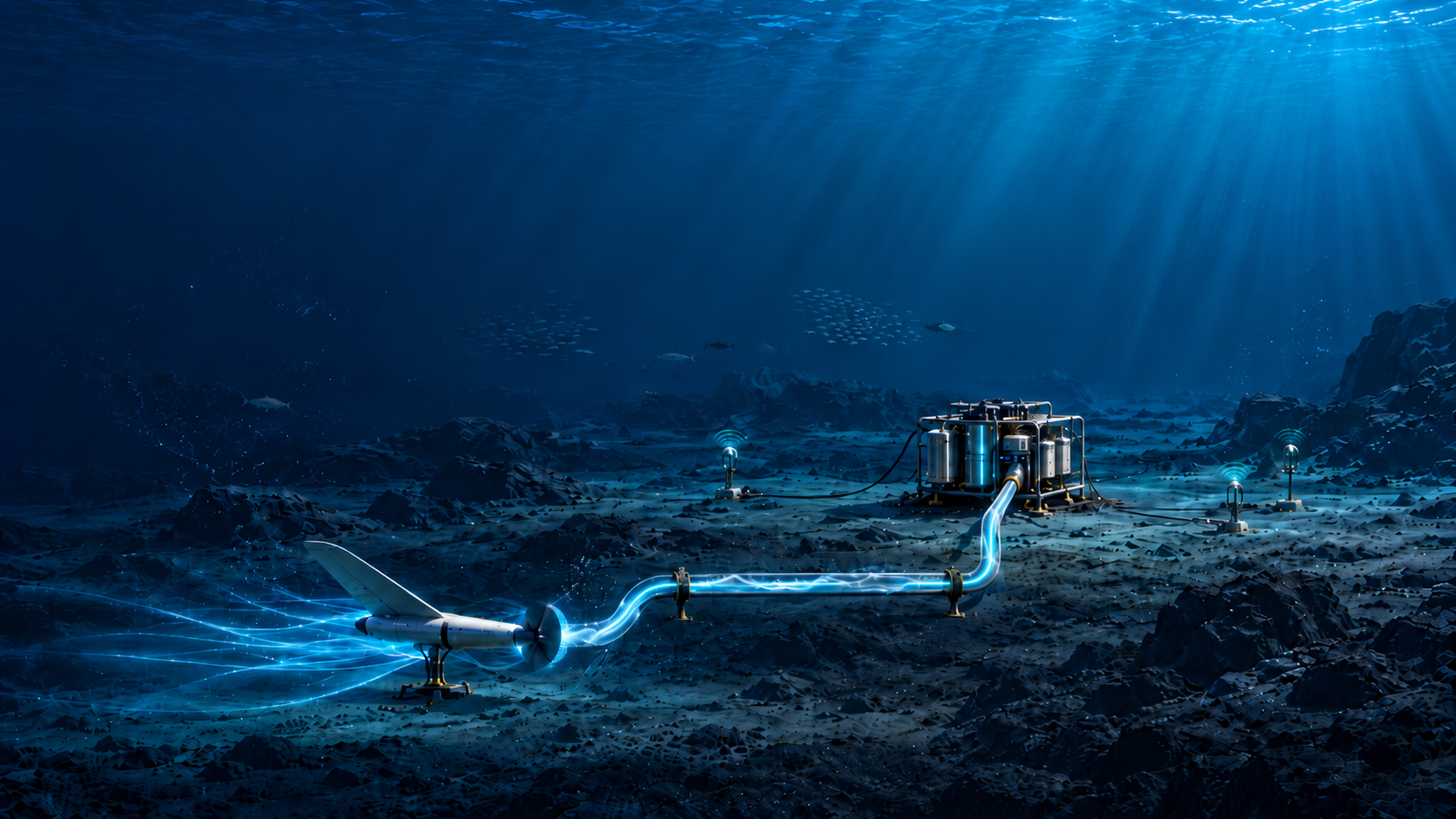
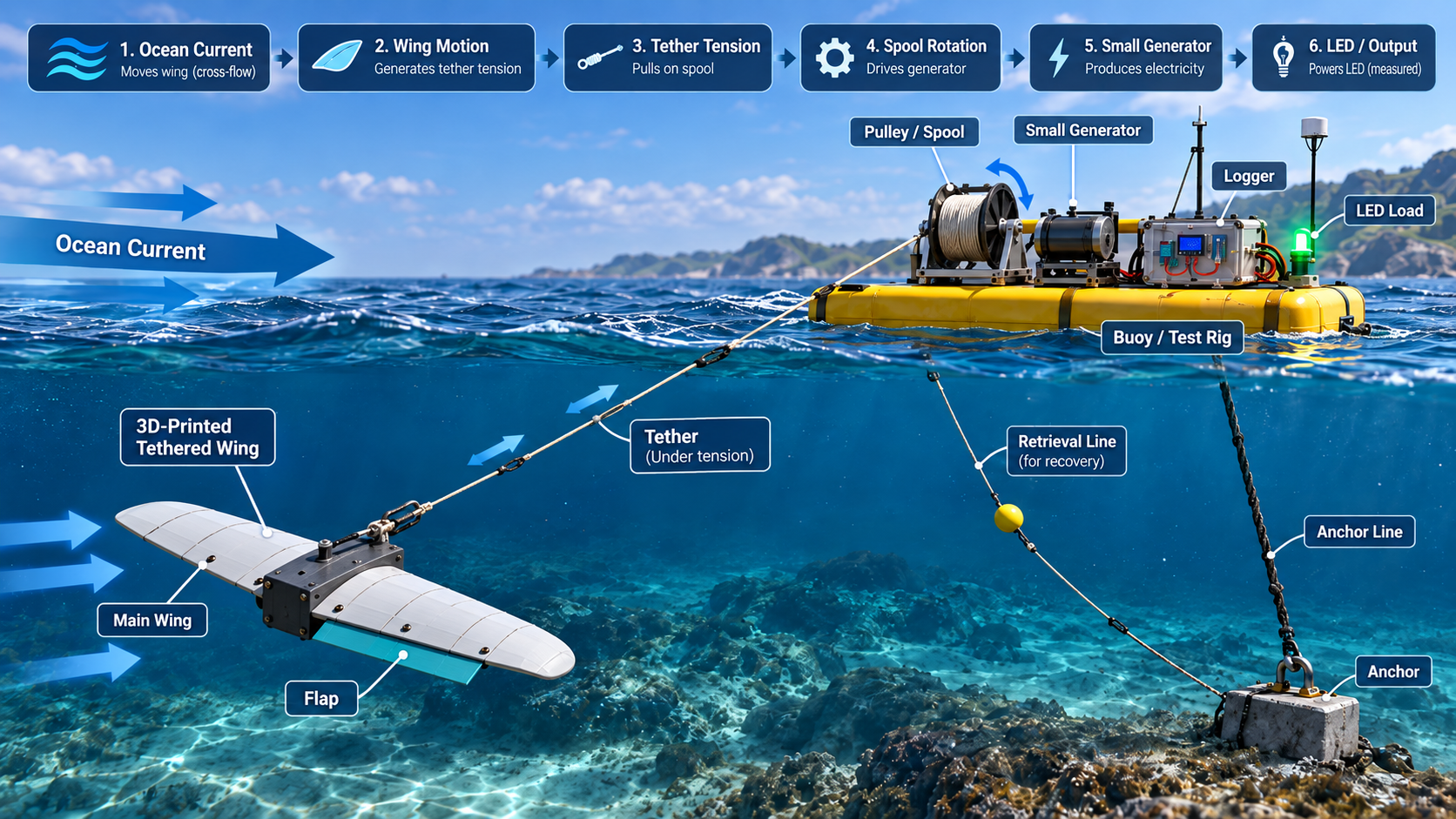
Our engineering hypothesis is that a submerged wing can use ambient currents to create useful forces and influence local water movement. We are investigating whether this interaction can support a controllable, low-external-energy ocean system.

Characterize the currentDefine current direction, speed variability, water depth and the operating conditions that a prototype must tolerate.
Set the wing geometry and orientationExplore wing shape, area, angle and support geometry to understand how the structure interacts with the incoming flow.
Evaluate motion, loads and water movementCompare predicted behavior with measurements. Assess stability, structural loads and whether the intended flow response is repeatable.
Test the application separatelyMechanical operation is the first question. Carbon transport, net removal and ecological outcomes require their own evidence.
Research concept: the final configuration, operating depth and performance envelope remain to be established through design and testing.
02 / System architecture

Four connected engineering questions.

Wing & hydrodynamic response

Compare candidate hydrofoil or wingsail geometries and orientation strategies. Investigate force response, stability and sensitivity to changes in current direction.

Design outputs: geometry options, predicted loads and a proposed operating envelope.

Support & anchoring

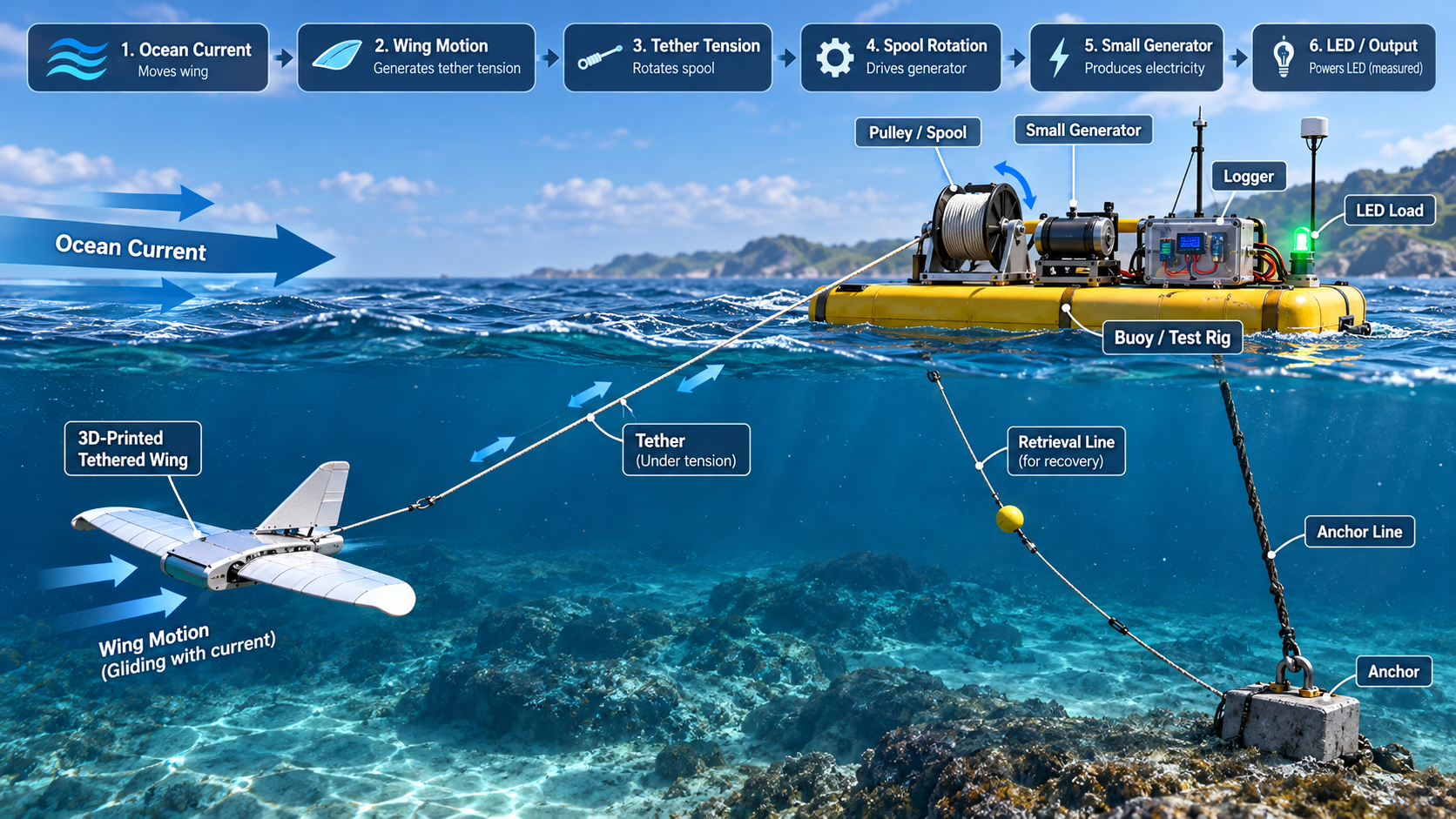
Evaluate how the submerged assembly would be supported or anchored, including load transfer, fatigue, installation, retrieval and compatibility with the test location.

Design outputs: support concept, load cases and retrieval plan.

Materials & prototype

Use small-scale fabrication to examine assembly, movement and mechanical robustness. Assess material choices for water exposure, corrosion, fouling and maintenance needs before longer trials.

Design outputs: component list, fabrication drawings and a testable assembly.

Measurement & observation

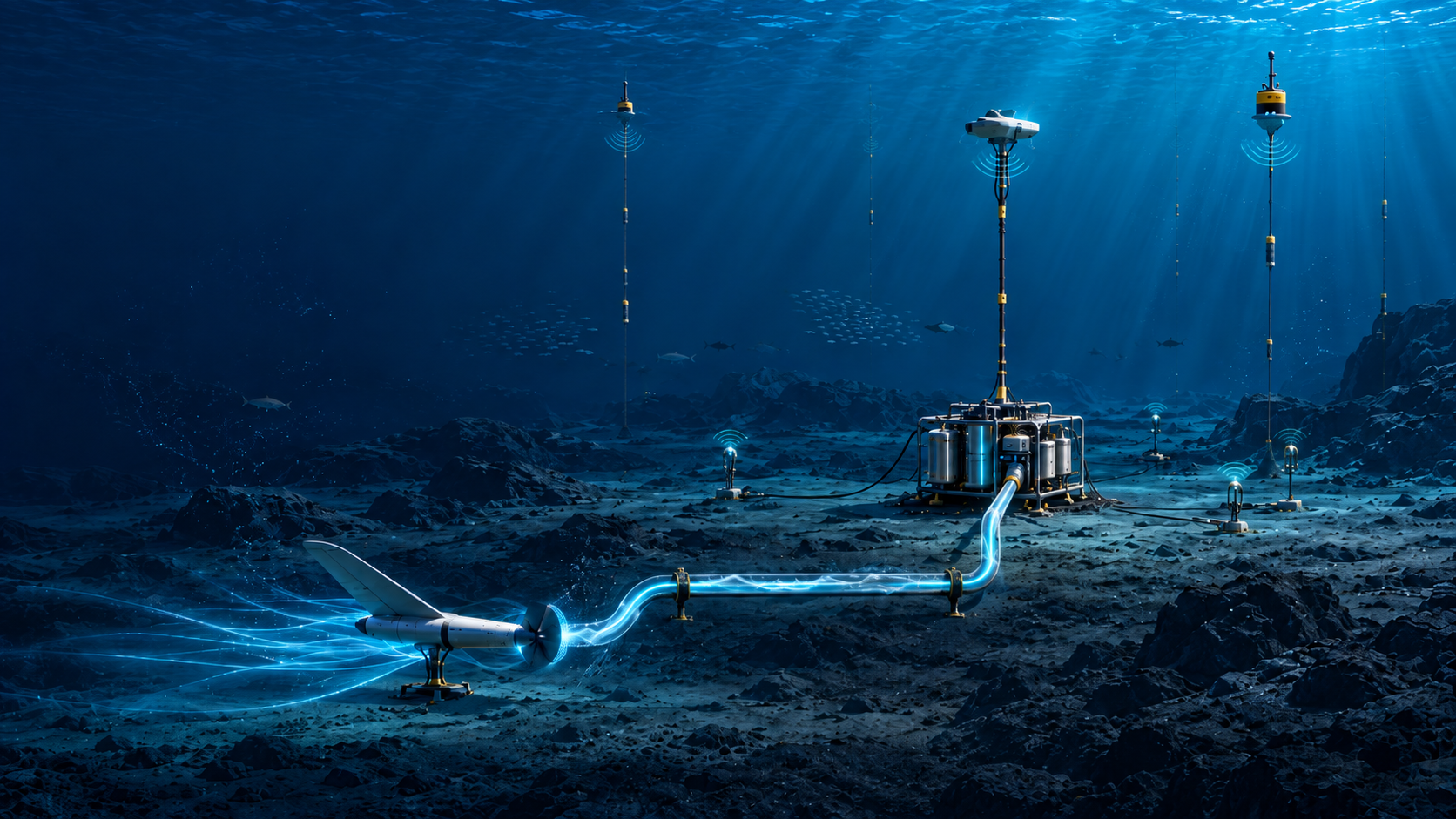
Define the measurements needed to evaluate the concept: current conditions, wing behavior, structural response and changes in the surrounding water. Select instrumentation for the actual experiment.

Design outputs: measurement plan, baseline protocol and data-quality checks.

03 / Development & validation

A staged path to reliable evidence.

StageWork proposedDecision supported
Model & simulateMATLAB-based modeling; sensitivity studies across geometry, flow and load assumptions.Which designs warrant fabrication?
Build a small prototypeAssemble selected components and evaluate mechanical behavior under controlled conditions.Does the mechanism behave as intended?
Prepare a marine pilotDefine a test location in Korea, baseline observations, permissions, monitoring and retrieval procedures.Can a bounded field experiment proceed?
Compare & refineCompare measured response with model predictions; document uncertainty and revise assumptions.What needs to change before scaling?

These are development stages, not completed milestones. Dates and performance targets will depend on the selected design and test conditions.

04 / Climate research

A working device is only the beginning.

AquaByss is exploring whether engineered ocean-flow interactions could contribute to a durable carbon-storage pathway. The connection between local water movement and atmospheric carbon removal is a research question, not an established product outcome.

Define the carbon pathway

Identify the source and form of carbon, how it would be transported or retained, and how the proposed intervention differs from natural background processes.

Establish additionality

Compare an intervention scenario with a credible baseline. A change in carbon location alone is not sufficient evidence of net atmospheric removal.

Assess durability & net benefit

Evaluate potential return pathways and storage duration. Include manufacturing, deployment, maintenance and recovery in a lifecycle assessment.

Monitor environmental response

Define site-specific observations for oxygen, water chemistry, nutrients, habitat interactions and unintended redistribution before considering larger trials.

No verified removal rate, storage duration, carbon-credit eligibility or commercial cost per tonne is claimed at this stage.
Technical questions

What we are working to resolve.

Does the system generate electricity?

The current research emphasis is on using ambient flow for mechanical interaction. Electrical generation is not presented as a validated feature or current commercial service.

How is this different from adding alkalinity?

The concept described here focuses on hydrodynamic structures and flow interaction. It does not specify an alkalinity-addition process. The carbon pathway must be defined and validated independently.

What role can satellite data play?

Earth-observation experience can inform regional context and pilot screening. Subsurface flow and carbon-process validation will require suitable in-water observations and modeling; satellite data alone cannot verify the proposed outcome.

What comes before scale-up?

Repeatable engineering results, a quantified carbon pathway, environmental assessment and a practical deployment and retrieval strategy. Each requires documented evidence before larger deployment is considered.

Research partnerships

Build the evidence with us.

Discuss a research question, prototype collaboration or pilot opportunity.

aquabyss@aquabyss.io ↗